

Greenhouse gas emissions target reached early
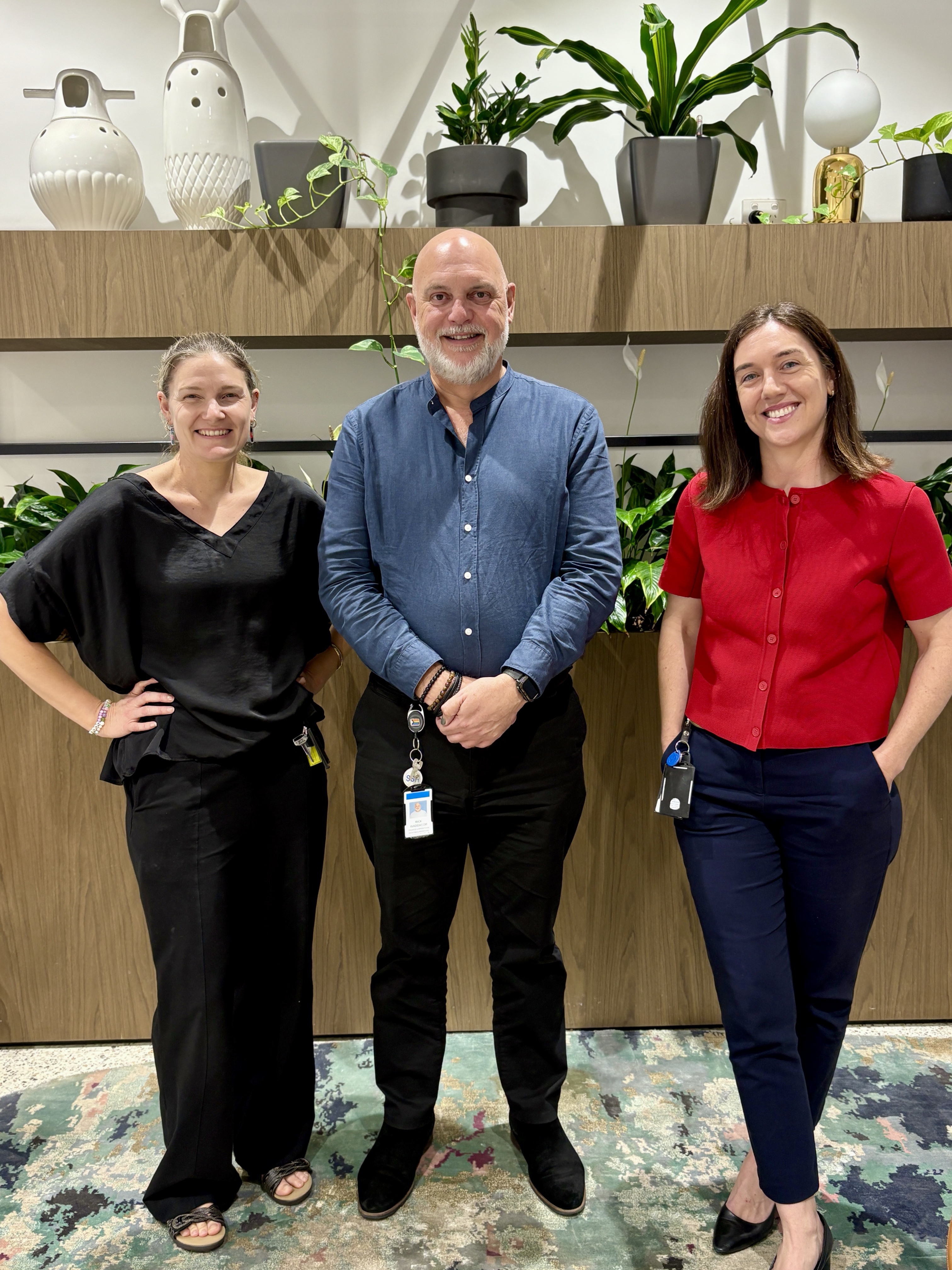 Jamie Cavill Chin Manager Sustainability, Rick Waddacor Manager Facilities and Operations, Ashleigh Richards Director Strategy
What do we want? Reduced greenhouse gas emissions. When do we want it? Now!
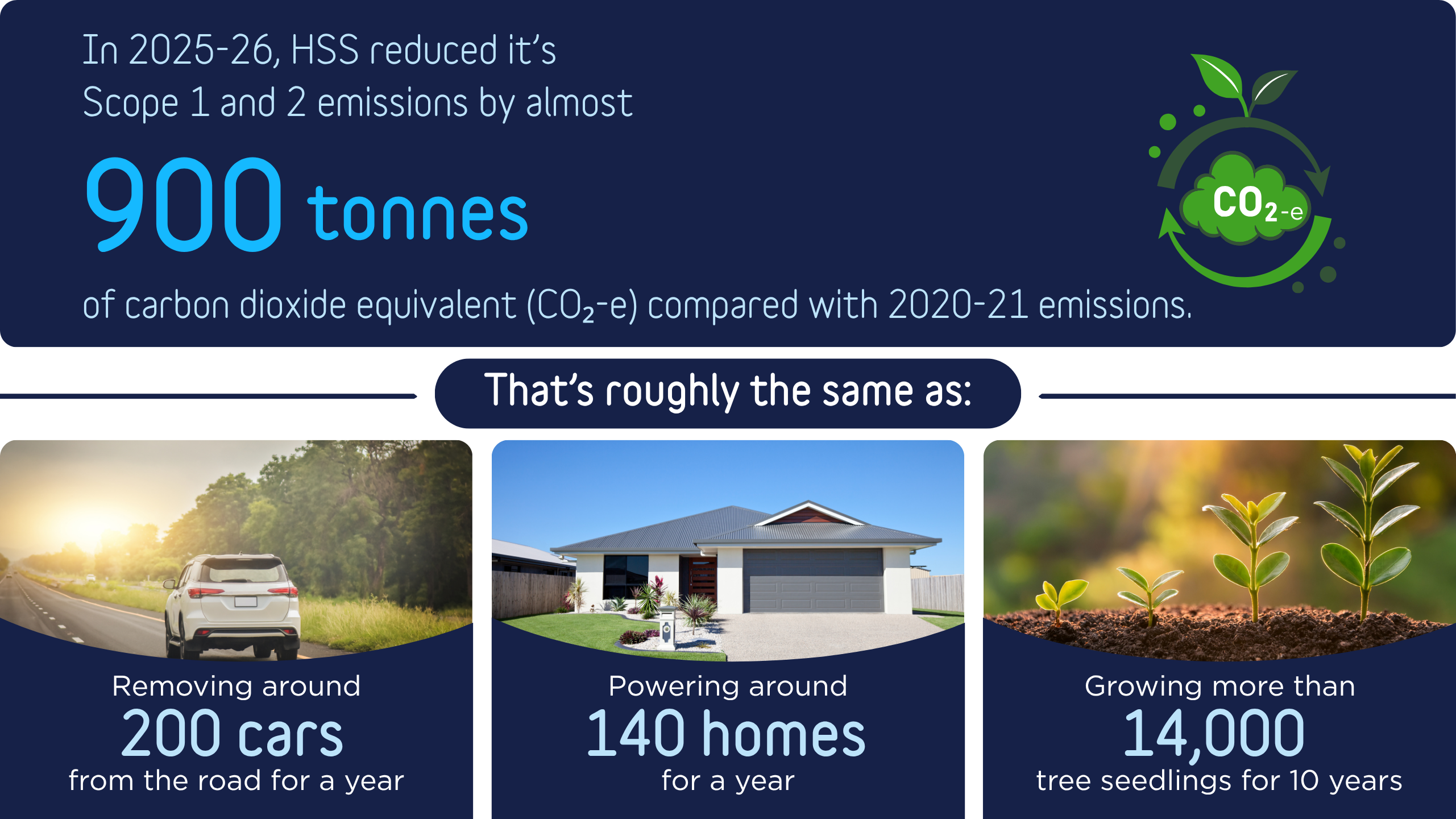
And HSS has delivered, achieving an 80 per cent reduction in Scope 1 and 2 greenhouse gas emissions from 2020 levels, ahead of the 2030 target.
“Reaching the target took significant planning, analysis and collaboration across HSS, putting our value We connect and collaborate for success into action,“ said Jamie Cavill Chin, Manager Sustainability.
We gathered historical data on electricity consumption, fuel use and refrigerant gas leaks from air conditioning across HSS locations and vehicles, dating back to 2020.
This data provided a baseline for tracking our progress. Once collated, it calculated our annual greenhouse gas emissions to establish our emissions profile and identify opportunities to reduce our impact.
HSS’ electricity consumption and renewable energy requirements were also assessed to determine how much GreenPower would be needed to help achieve the target.
The next step was securing organisational support and funding for the initiative, with multiple suppliers explored to find the most cost-effective renewable electricity option.
GreenPower was then purchased through a two-stage approach:
- An initial purchase based on projected electricity consumption.
- A final "true-up" purchase once actual annual emissions were confirmed, ensuring all eligible electricity consumption was matched with accredited renewable energy.
Combined with ongoing emissions reduction initiatives, including the move to hybrid vehicles in our fleet and installation of energy-saving lights, this approach enabled HSS to achieve its target of an 80 per cent reduction in Scope 1 and 2 emissions.
Smashing this target ahead of schedule is an important milestone in HSS’ sustainability journey and demonstrates what can be achieved through organisational commitment, data-driven decision-making and collaboration across teams.
But we’re not stopping there.
We continue to explore further opportunities to reduce emissions, including expanding the use of hybrid vehicles, assessing the feasibility of electric vehicles and EV charging infrastructure, and incorporating sustainability requirements into future accommodation planning to improve energy efficiency and reduce refrigerant leaks from air conditioning systems.
We’re also increasing our focus on Scope 3 emissions by establishing a baseline understanding of these emissions and progressing initiatives in waste management, sustainable procurement, supply chain emissions and employee commuting.
Watch this green space!